
If you’ve lived in Central Texas for a winter or two, you probably know cedar fever by name. The sneezing, itchy eyes, and foggy headaches that arrive with Ashe juniper pollen every winter are practically a rite of passage here, but what most homebuyers don’t realize is how much the house itself can shape that experience.
When people think about green homes, they usually think about lower energy bills, solar panels, or a smaller environmental footprint. But one of the most overlooked advantages of a high-performance green home is what it does for the air you breathe every day. The same features that make a home energy efficient, like an airtight building envelope, high-performance insulation, smart humidity control, and healthier finishes also help keep pollen, dust, moisture, and chemical pollutants out of your living space.
Here’s how green home building supports better indoor air quality, why it matters so much in Central Texas, and what to look for if allergies are part of your household’s story.
Why Indoor Air Quality Deserves a Spot on Your Wish List
Most of us spend far more time indoors than we realize. According to the U.S. Environmental Protection Agency, Americans spend roughly 90% of their time inside, and indoor concentrations of some pollutants are often two to five times higher than typical outdoor levels.
In a conventional home, much of the “fresh air” that comes inside isn’t fresh at all. It leaks in through gaps around windows, doors, outlets, attic penetrations, and framing seams: unfiltered, unconditioned, and carrying whatever happens to be floating around outside. Meanwhile, paints and materials inside the home can release volatile organic compounds (VOCs), and excess humidity creates the conditions where mold and dust mites thrive.
For homebuyers with allergies, asthma, chemical sensitivities, or young children, these details matter. And because they’re built into the structure of the home, they’re far easier to get right during construction than to fix after move-in.
Central Texas Allergens Don’t Take a Season Off
In much of the country, winter brings a break from pollen. Not here. Central Texas deals with allergens nearly year-round:
- Winter: Cedar fever. Ashe juniper trees, commonly called mountain cedar, release enormous amounts of pollen from roughly December through February, typically peaking in mid-January. These trees are especially concentrated west of I-35, across the same Hill Country communities where many of our homes are built.
- Spring: Oak and other tree pollens, followed by grasses into early summer.
- Fall: Ragweed and other weed pollens.
- Year-round: Dust mites and mold, both of which flourish in humid conditions.
Add long, humid summers and dry, windy winters that carry pollen for miles, and it’s easy to see why the way a home handles outdoor air is so important here. A home that keeps the outdoors outside while still feeling fresh and comfortable is a genuine quality-of-life upgrade.
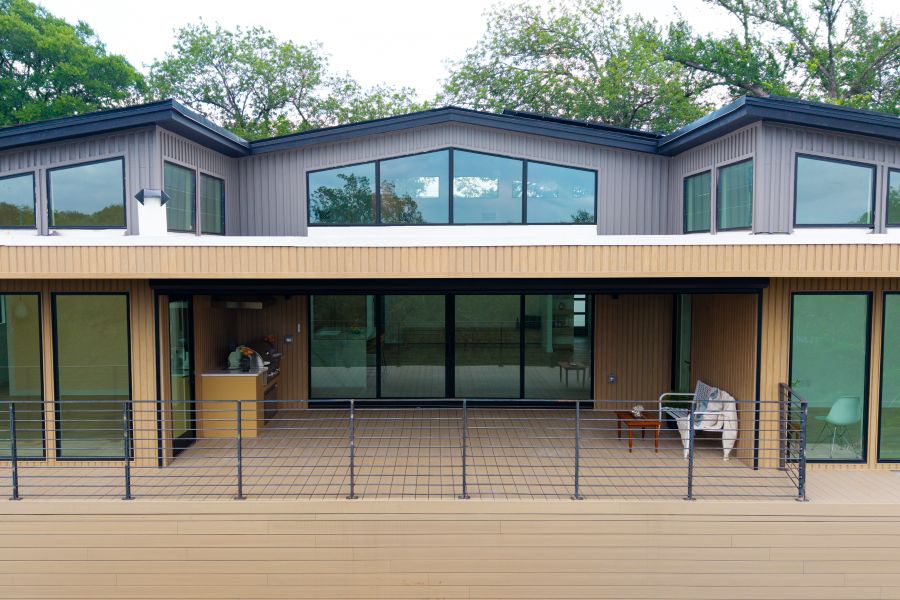
How a Tight Building Envelope Keeps Allergens Out
The building envelope is everything that separates your indoor space from the outdoors: the foundation, walls, roof, windows, and doors. In green home construction, the goal is a tight envelope, one that minimizes uncontrolled air leakage.
At Build Native, a tight building envelope is the starting point for every green home we build. We achieve it through advanced framing techniques and full-envelope spray foam insulation, paired with energy-efficient windows. Most people think of air sealing as an energy feature, and it is. It’s also an air quality feature.
Here’s why: when a home leaks, outdoor air takes the path of least resistance indoors, bringing pollen, dust, and humidity with it. When a home is sealed, air moves through controlled, filtered pathways instead of through every crack and gap. That shift from accidental airflow to intentional airflow is a big part of why high-performance homes tend to feel cleaner, quieter, and more comfortable.
Spray Foam Insulation: Sealing Out Pollen, Dust, and Pests
Spray foam is one of the most effective tools we use to create that seal. Applied as a liquid, it expands to fill the gaps, seams, and voids that traditional batt insulation can leave behind, forming a continuous air barrier throughout the home.
That barrier helps block air and moisture intrusion, airborne pollutants, and allergens. It also reduces pest infestations in walls, an underrated benefit for allergy sufferers, since pest droppings and debris are a common indoor allergy and asthma trigger.
Unvented Attics: Bringing Ductwork Inside
In many conventional Texas homes, ductwork runs through a vented attic that can reach extreme temperatures and collect dust, insulation fibers, and humidity. Any leaks in that ductwork can pull attic air straight into your living space.
Build Native homes use an unvented attic design, with spray foam applied at the roofline to bring the attic inside the conditioned envelope. Ducts and mechanical equipment operate in a cleaner, cooler space, and the whole home stays cooler and healthier as a result. You’ll never see it, but you’ll notice it. (We cover this and other climate-specific details in Best Building Practices for Austin’s Climate.)
Energy Recovery Ventilators: Fresh, Filtered Air Without the Humidity
A tight home still needs a steady supply of fresh air. The question is how that air gets in. In a leaky home, it seeps through gaps and cracks with no filtration at all. In a Build Native home, it comes through an energy recovery ventilator (ERV), which we now install as a standard feature.
An ERV continuously brings fresh outdoor air into the home, but it doesn’t simply open the door to the weather. Incoming air is conditioned as it enters, so you get fresh air without pulling hot, humid Central Texas air straight into your living space. That keeps indoor humidity in check and keeps your cooling system from working overtime.
Just as important for allergy sufferers, the ERV filters incoming air to remove pollen and other contaminants before it mixes with the rest of your home’s conditioned air. During cedar season, that means the fresh air your family breathes has been cleaned first, rather than drifting in unchecked around windows and doors.
It’s the piece that makes an airtight home work: the efficiency and allergen control of a sealed envelope, plus a constant supply of fresh, filtered air.
Humidity Control: The Hidden Key to Fewer Allergy Triggers
If there’s one indoor air factor Central Texas homeowners underestimate, it’s humidity. Dust mites and mold both thrive in damp conditions, and the EPA is clear that controlling moisture is the key to controlling mold indoors.
Green homes tackle humidity on two fronts. First, a sealed envelope keeps humid outdoor air from seeping in during our long, sticky summers. Second, high-efficiency heating and cooling helps manage the moisture that’s already inside. We commonly install high-efficiency air source heat pumps, which also enhance dehumidification for better summer comfort.
A well-designed envelope protects the structure, too. Moisture intrusion is one of the leading causes of long-term maintenance problems in homes, and hidden moisture inside walls is exactly where mold problems tend to start. Keeping water vapor out of the wall assembly protects both your investment and your air.
Cleaner Finishes, Cleaner Air: Why Low-VOC Paint Matters
That “new house smell” many people associate with a freshly built or painted home is often VOCs evaporating into the air. VOCs can come from paint, flooring, furniture, and other household products, and exposure can contribute to headaches, nausea, and respiratory irritation, effects that are amplified in an enclosed space.
Build Native uses low-VOC paint as our standard, and we can finish interiors with zero-VOC paint on request. For clients with chemical sensitivities or health concerns, we’ll talk through the options together, balancing health, lifestyle, budget, and durability so your finishes fit the way you live. Learn more in our post on why green homes use low-VOC paint.
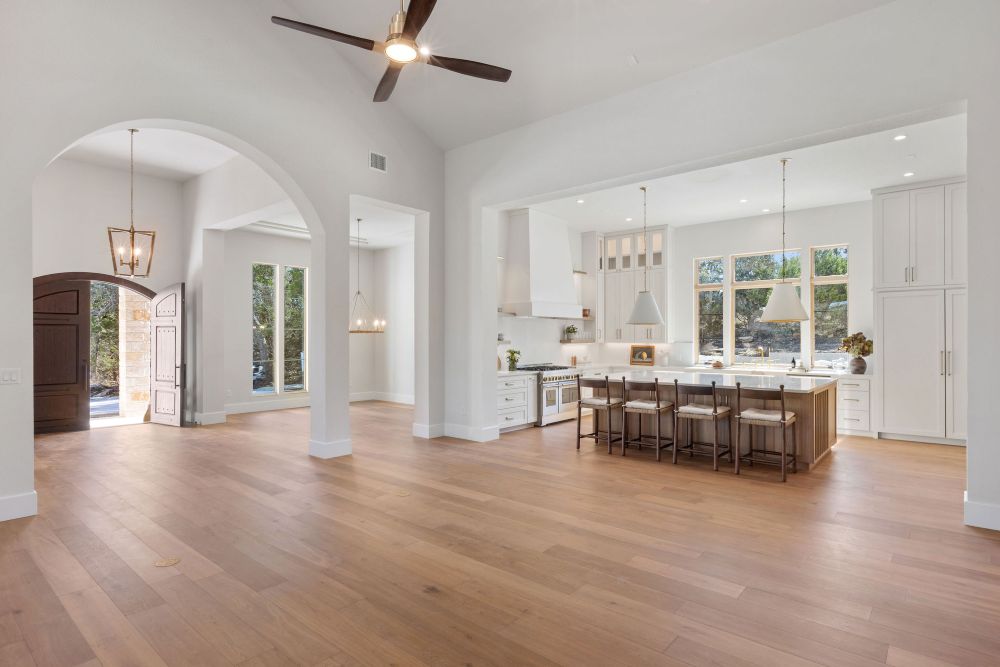
Building a Healthier Home in Austin and the Texas Hill Country
Build Native has been building green, high-performance custom homes in Austin and Central Texas since 2007, including our Vineyard Ridge home, named Fine Homebuilding Magazine’s Best Energy-Smart Home of the Year. Our holistic approach means air quality isn’t an afterthought. It’s built into the envelope, the insulation, the mechanical design, and the finishes from day one.
As one Austin homeowner, Miki Cook, put it: “Best around, especially if you’re looking to build a modern, efficient, healthy home in the Texas Hill Country.”
Whether you’re planning to build on your lot in Dripping Springs or Wimberley, or envisioning a custom home closer to Austin, we’d love to talk about how a green home can help your family breathe easier, cedar season included. Contact us to start the conversation.
Frequently Asked Questions
Does a green home help with allergies?
A green home can’t cure allergies, but it can reduce your exposure to common indoor triggers. Airtight construction limits how much pollen and dust leaks in from outside, humidity control discourages dust mites and mold, and low-VOC finishes reduce chemical irritants in the air.
Can an airtight home help with cedar fever?
It can help limit exposure. Ashe juniper pollen peaks in Central Texas from December through February, and in a leaky home it drifts indoors through gaps around windows, doors, and framing. A tightly sealed building envelope reduces those entry points, so less pollen makes it into your living space.
Isn’t an airtight home bad for indoor air quality?
Not when it’s designed correctly. High-performance homes are built so that fresh air enters through controlled, filtered pathways rather than random leaks. That gives you more control over what comes inside, which is the opposite of a conventional home where unfiltered outdoor air enters wherever it can.
Does spray foam insulation affect indoor air quality?
Over the long term, spray foam improves indoor air quality by sealing out air, moisture, allergens, and pests. Spray foam does release VOCs briefly while it cures, but this happens during construction, well before the homeowners move in.
How do you reduce humidity in a Texas home?
The most effective approach starts with the building itself. A tight envelope keeps humid outdoor air out, high-efficiency heat pumps provide enhanced dehumidification, and an unvented attic keeps ductwork out of hot, humid attic air. Together, these help keep indoor humidity in a range that discourages mold and dust mites.
What is the difference between low-VOC and zero-VOC paint?
Low-VOC paints contain reduced levels of volatile organic compounds compared to conventional paints, while zero-VOC paints contain only trace amounts. Build Native uses low-VOC paint as standard and offers zero-VOC paint on request for clients with chemical sensitivities or health concerns.
