
Texas summers don’t play fair. Triple-digit heat, a power grid that’s had its share of bad days, and energy bills that seem to climb every single year. The good news? None of that has to be the cost of living here. Green, net-zero homes are proving that a house built the right way can shrug off a Central Texas summer, staying cooler, costing less, and keeping the lights on when it matters most.
At Build Native, we’ve been building green in Austin and the Texas Hill Country since 2007, and every summer reinforces why. A home engineered for this climate is built from the ground up to handle everything a Hill Country summer can throw at them, and the families living in them know it firsthand.
Why Texas Summers Are So Hard on a Home
Central Texas heat can be relentless, with triple-digit days often stretching for weeks, humidity adding to the strain on cooling systems, and the sun beating down on roofs and windows for the better part of the day. A conventionally built home is constantly fighting to keep that heat out, and every gap in the building envelope, every inefficient window, and every undersized HVAC system becomes a weak point the moment summer arrives.
The result is a home that works harder than it should, an AC system that runs almost continuously, and a utility bill that spikes right alongside the temperature. It’s also a strain on the Texas power grid itself, which has faced well-documented reliability challenges during periods of peak summer demand. A green, net-zero home is designed from the start to solve all three problems at once.
The Building Envelope: Your First Line of Defense
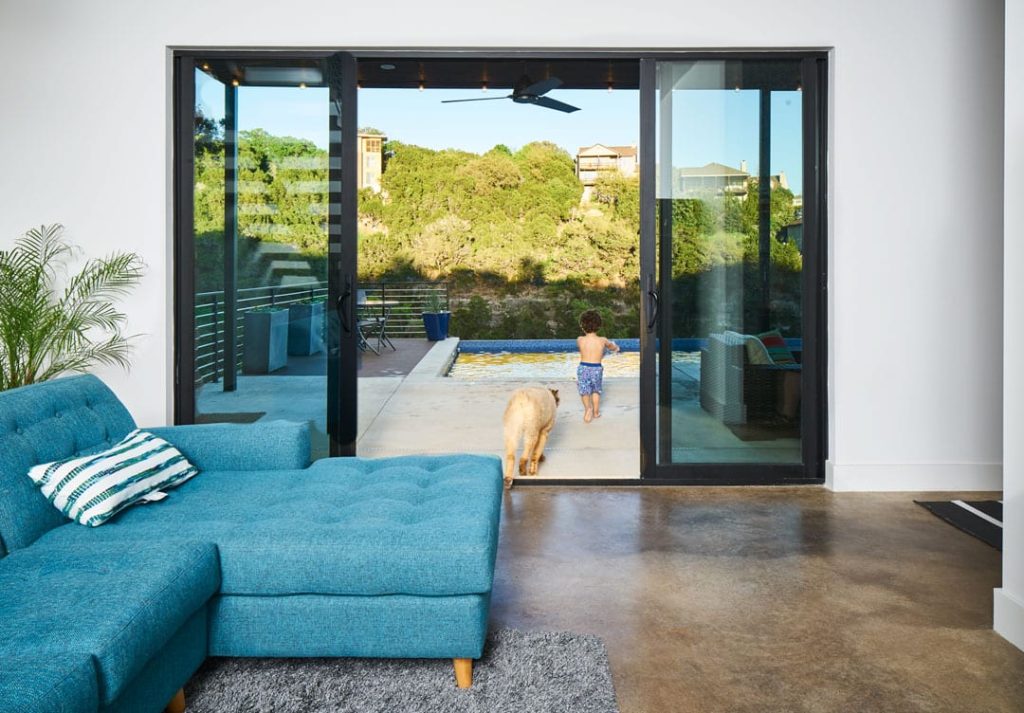
Before you ever talk about solar panels or high-efficiency HVAC, the real work of beating the heat starts with the building envelope: the layer of insulation, air sealing, and materials that separates the inside of your home from the outside world. A tight envelope prevents air leakage, which means the cool air you’re paying to generate actually stays inside.
We achieve this through advanced framing techniques and full-envelope spray foam insulation, which seals a home against air and moisture intrusion far more effectively than traditional batt insulation. In a climate where the temperature swing between an August afternoon and an air-conditioned living room can be 40 degrees or more, that seal matters. It reduces the load on your HVAC system, improves indoor air quality, and keeps your home comfortable even on the hottest days of the year.
Energy-efficient windows play a similar role. Advanced technologies like double (or triple) glazing and low-emissivity coatings minimize heat transfer through glass, which is often one of the biggest sources of unwanted heat gain in a Texas home. Combined with a tight envelope, the right windows mean your cooling system isn’t fighting a losing battle against the sun all afternoon.
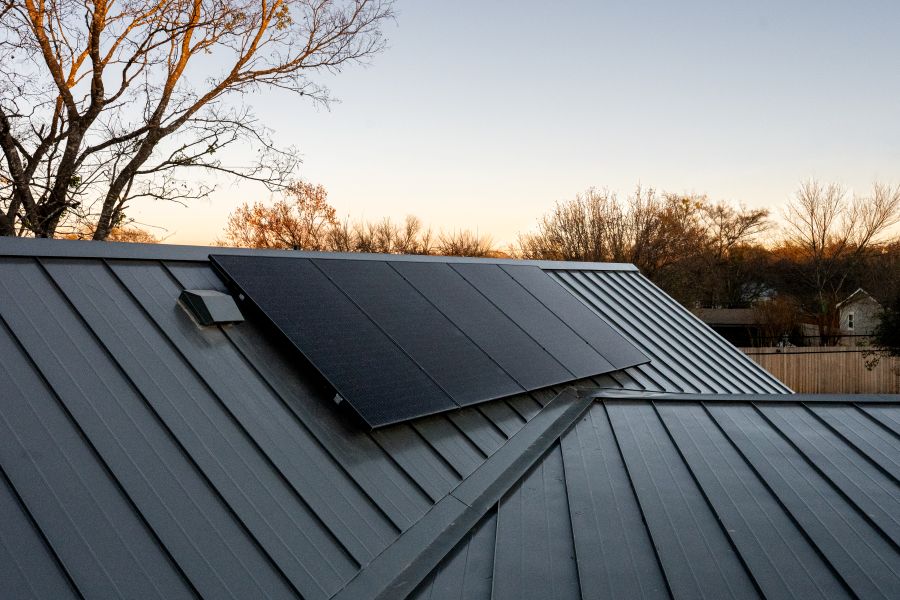
Standing seam metal roofs, a Build Native signature, add another layer of resilience. Metal roofing reflects more solar heat than traditional shingles and holds up for decades in intense Texas sun, all while providing a clean surface for solar panel installation without the need for roof penetrations.
Cooling Systems Built for Texas Heat, Not Against It
Once a home’s envelope is tight, the next question is how to cool it efficiently. This is where heat pump technology has changed the equation for Texas homeowners. Air source heat pumps don’t generate heat or cold, they move it, transferring heat between indoor and outdoor air the same way a refrigerator does. Because they move heat rather than creating it, they can reduce energy consumption by 30 to 40% compared to conventional systems, with high-efficiency models also improving dehumidification for added comfort during Texas’s muggy summer months.
For homeowners who want to go a step further, geothermal heat pumps take advantage of a simple fact about Texas ground temperature: just six feet below the surface, it stays a consistent 70 degrees year-round, no matter how hot it gets above ground. By exchanging heat with the earth instead of the outside air, geothermal systems can deliver exceptional efficiency, particularly for larger custom homes. Between the two, the right choice comes down to lot size, budget, and how a homeowner wants to balance upfront investment against long-term efficiency, which is something we walk through with every custom home client.
Solar Power: Turning Texas Summers Into an Advantage
The same Texas sun that drives up cooling costs is also one of the state’s greatest renewable resources. Solar power technology has matured dramatically over the past decade, and the cost of solar energy has now reached parity with non-renewable sources, making it a realistic option for nearly every new custom home. Nearly all Build Native homes include solar power, and after constructing a tight, high-performing envelope, adding solar panels to offset remaining energy usage is the last step in achieving net-zero.
Battery technology has advanced right alongside it. Today’s batteries offer significantly higher capacity and output than they did even a year ago, making it possible to power an entire home on solar and maintain backup power if the Texas grid is ever interrupted, which is a real concern that many Central Texas homeowners remember vividly from past summer and winter grid events. For homeowners who already have a house and want to add solar independently, our sister company, NATiVE Solar, brings that same expertise to existing homes and businesses across Austin and the Hill Country.
Water in a Hot Climate
Summer heat and water scarcity tend to go hand in hand in Central Texas, which is why rainwater collection is such a core part of green home building here. A rainwater harvesting system captures, filters, and stores rainwater for use as a home’s primary potable water supply, and in many cases the water quality is actually higher than municipal or well water, free of the fluoride, chemicals, and hard minerals often found in other sources. Most Build Native homes are designed with rainwater systems capable of supplying 100% of the home’s water demand, giving homeowners a genuine sense of independence during the driest, hottest stretches of the Texas year.
The Payoff: A Home That’s Actually Comfortable in the Summer
All of these systems work together, not in isolation. A tight envelope reduces the cooling load. An efficient heat pump or geothermal system meets that reduced load with far less energy. Solar panels offset the energy that’s used. And a well-designed home stays comfortable, quiet, and resilient, even during a Texas grid alert.
Build Native homeowners see this play out firsthand. One of our clients on the Vineyard Ridge project, recognized by Fine Homebuilding Magazine as a Best Energy-Smart Home of the Year, put it simply: their home used less electricity than their solar arrays generated over the course of a year. Add in a rainwater collection system, and that’s a home operating at true net-zero, in the middle of Texas Hill Country summer heat.
That’s the real promise of green home building in this climate. It’s not a tradeoff between luxury and sustainability, it’s both at once: a beautifully designed custom home that also happens to be engineered to beat the heat.
Frequently Asked Questions
Does a net-zero home actually stay cooler in summer, or does it just save money?
Both. The building envelope, insulation, and windows that make a net-zero home energy efficient are the same features that keep indoor temperatures more stable and comfortable, even during extended heat waves.
Can a green home keep the power on during a grid emergency?
With solar panels and a modern battery system, many Build Native homes can maintain power independent of the grid, which has become an increasingly important consideration for Central Texas homeowners.
Is rainwater collection reliable enough to be a home’s main water source in summer?
Yes. Most Build Native homes are designed with rainwater systems sized to supply 100% of the home’s water demand, using filtration and purification to make it fully potable.
Do I need geothermal, or is an air source heat pump enough?
For most homes, a high-efficiency air source heat pump paired with solar delivers excellent results at a lower upfront cost. Geothermal remains a strong option for larger homes or specific site conditions, and we help each client evaluate which makes sense for their build.
Is building green more expensive than a conventional custom home?
Green building does involve upfront investment in materials like spray foam insulation and solar, but those costs are offset over time through dramatically lower utility bills, and in many cases, homes achieve close to net-zero energy costs altogether. The additional investment is typically recouped in 3-5 years.
Ready to Build a Home That Beats the Heat?
Build Native has been Central Texas’s premier sustainable custom home builder since 2007, serving Austin, the Hill Country, and San Antonio-area communities. We believe you shouldn’t have to choose between a luxurious home and one built to handle a Texas summer. If you’re ready to talk about a custom home designed to stay cool, save money, and hold up to whatever the Texas grid throws at it, we’d love to hear from you.
