
If you’ve started researching sustainable homebuilding in Central Texas, you’ve probably run into a wall of overlapping terms: green home, net-zero home, eco-friendly home, and passive home. They get used almost interchangeably online, but they don’t necessarily mean the same thing, and understanding the difference can change how you plan, budget, and design your build.
“What is a passive home?” in particular has become one of the most common questions we hear from homeowners exploring a custom build with Build Native. So let’s clear it up: what a passive home actually is, how it compares to the other terms you’ve seen, and why passive design is especially valuable in a climate like Central Texas
What Is a Passive Home?
A passive home is a home designed from the ground up to need very little energy for heating and cooling. Instead of relying on a bigger, more powerful HVAC system to fight the outdoor climate, passive design reduces how much heat gets in (or out) in the first place.
That comes down to a handful of core principles working together:
- An airtight building envelope that stops conditioned air from leaking out and hot, humid air from leaking in
- Continuous, high-performance insulation (often full-envelope spray foam) with no gaps or thermal bridges
- High-performance, energy-efficient windows and doors
- Thoughtful orientation and shading to manage solar heat gain
- Controlled, filtered ventilation that maintains fresh indoor air without losing conditioned energy
By cutting energy demand through design first, the result is a home that stays comfortable with far less mechanical effort and far lower utility bills, no matter what’s happening outside.
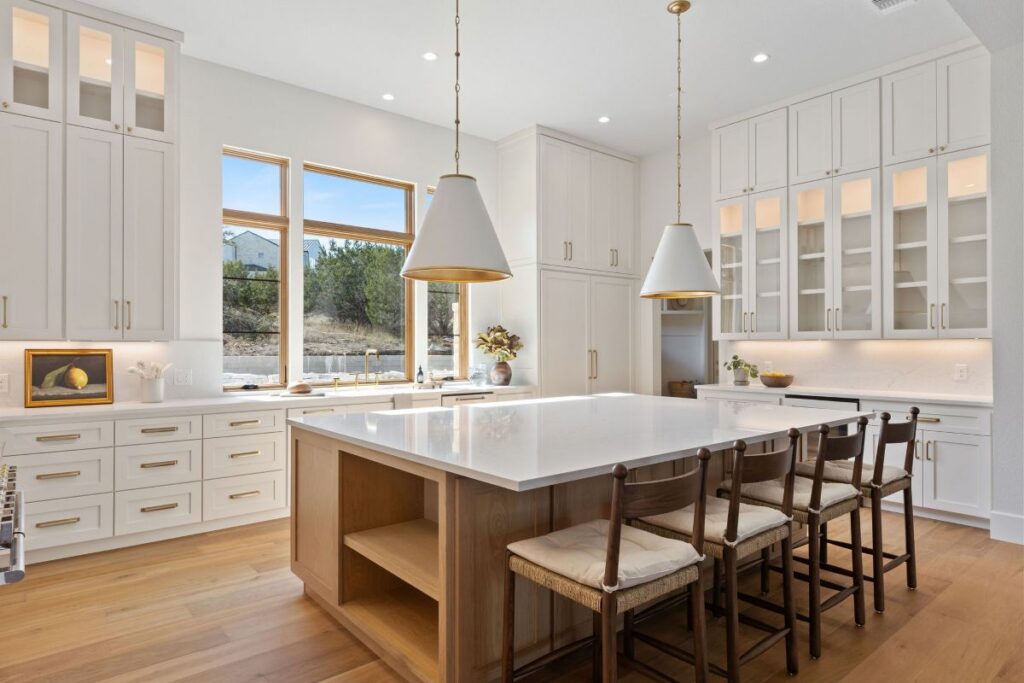
Passive Home vs. Green Home vs. Net-Zero Home
Here’s where most of the confusion comes from. Rather than competing definitions, these terms describe different layers of a sustainable build, and a single home can be all three at once.
Passive Home: A home designed to drastically cut energy demand through an airtight envelope, superinsulation, high-performance windows, and smart orientation before any solar or mechanical systems are added.
Green Home: A broad umbrella term for homes built with sustainable materials, resource-efficient methods, and reduced environmental impact.
Net-Zero Home: A home that produces as much energy as it consumes annually, typically by pairing high efficiency with solar power.
Think of it this way: passive design is the foundation that makes a home’s energy demand small enough that solar power can realistically get it to net-zero, and it’s one of many strategies that fall under the broader “green home” umbrella.
If a home is genuinely net-zero, it’s almost always because passive design principles reduced the energy load enough for solar to cover the rest. Passive design isn’t a competing philosophy to green or net-zero building, but rather usually the reason those goals are achievable at all.
Why Passive Design Matters in Texas
Passive building principles were developed in cooler European climates, but the logic behind them applies just as directly, or arguably even more so, to Central Texas. Our summers put a very different kind of stress on a home than a Northern European winter does, but the strategy for handling it is largely the same: keep the outside from overwhelming the inside.
- Lower cooling bills: Austin and Hill Country summers push HVAC systems into near-constant use. A tight, well-insulated envelope dramatically cuts the cooling load, which is typically the single biggest energy expense in a Texas home.
- Smaller, right-sized HVAC systems: Because passive homes lose so little conditioned air, they often need less mechanical cooling capacity, which can lower both equipment and operating costs.
- More resilience during grid strain: A home that holds its temperature well stays livable longer during summer peak-demand periods or winter grid events, when conditioned air matters most.
- Better indoor air quality: Controlled ventilation filters incoming air rather than relying on leaks and gaps, which helps keep out Central Texas allergens, humidity, and airborne pollutants.
- A stronger foundation for solar: A home with lower baseline energy demand needs fewer solar panels and less battery capacity to reach net-zero, which can meaningfully lower the cost of going solar later.
In short, passive design is a direct response to the challenge of keeping a home comfortable and efficient through months of extreme heat.
How Passive Design Fits Into a Build Native Home
At Build Native, passive principles are part of the same holistic approach we take to every green and sustainable build: a tight building envelope, full-envelope spray foam insulation, energy-efficient windows, and high-efficiency HVAC systems, all designed around your home’s specific site and orientation. You can read more about how these elements come together on our green home building page, or see how we’ve approached passive design on past projects.
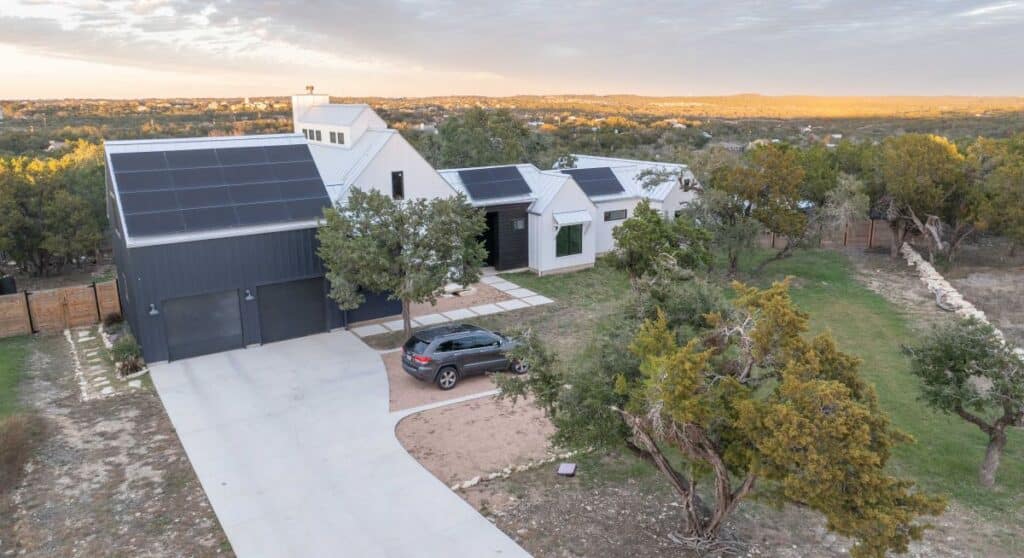
Passive Design + Solar: The Path to True Net-Zero
Passive design and solar power are great partners. A tighter, better-insulated home needs less energy to begin with, which means a smaller, more affordable solar array can realistically cover 100% of what’s left. That’s the combination that gets a home to genuine net-zero, rather than just “solar-powered.”
For homeowners exploring solar as part of a passive or net-zero build, our sister company, NATiVE Solar, is one of the longest-running solar energy providers in Texas and works directly alongside our building team on new construction and off-grid acreage projects.
Frequently Asked Questions
What is a passive home?
A passive home is a home designed to need very little energy for heating and cooling. It relies on an airtight building envelope, continuous insulation, high-performance windows, and smart orientation to keep conditioned air in and outdoor heat out, reducing the home’s overall energy demand before any solar or mechanical systems are added.
What’s the difference between a passive home and a green home?
“Green home” is a broad umbrella term for sustainable, resource-efficient building practices, while “passive home” refers specifically to a design strategy focused on minimizing energy demand through the building envelope. A passive home is typically green, but not every green home is built to passive design standards.
Is a passive home the same as a net-zero home?
No. A net-zero home produces as much energy as it consumes annually, usually through solar power. A passive home reduces how much energy is needed in the first place. Passive design and solar power typically work together, and a passive home’s lower energy demand makes net-zero much more achievable and affordable.
Do passive homes actually work in Texas heat?
Yes. Passive design principles were developed for extreme climates and apply directly to Central Texas summers. A tight, well-insulated envelope keeps heat and humidity out, which lowers cooling costs and reduces strain on HVAC systems during the hottest months of the year.
How much more does it cost to build a passive home in Texas?
Costs vary by design, site, and how far a project pushes toward formal certification, but passive-focused upgrades like insulation and high-performance windows are typically offset over time by lower utility bills and the ability to install a smaller, less expensive solar array. Your builder can walk through specific cost tradeoffs for your project.
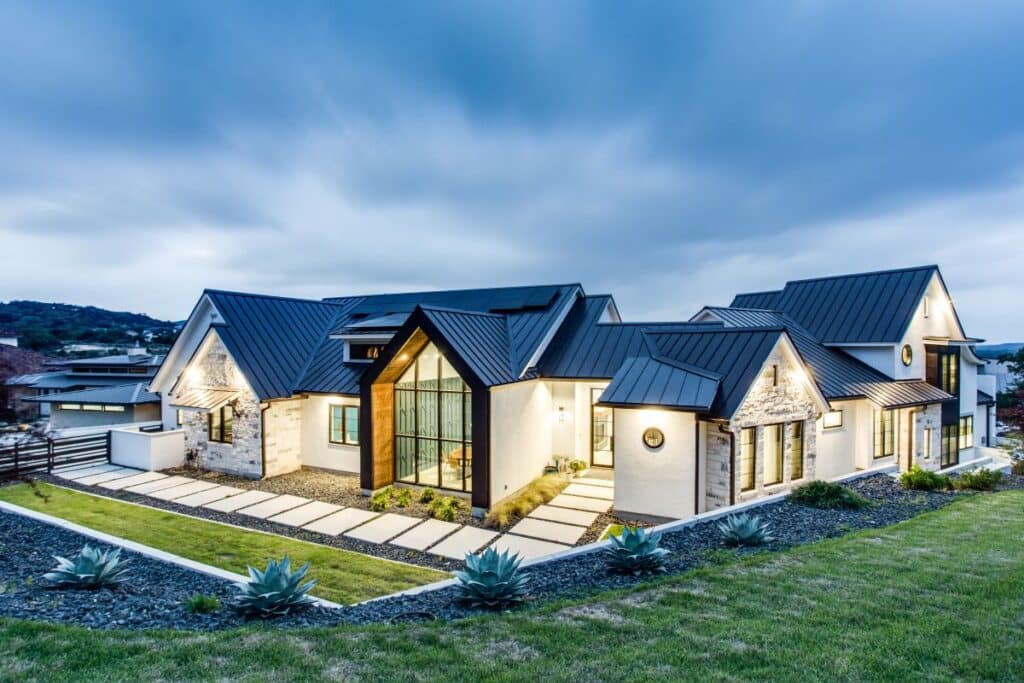
Ready to Build a Passive Home in Central Texas?
Whether you’re set on a fully net-zero build or simply want a more comfortable, efficient home for Texas summers, passive design principles are one of the most effective places to start. Our team has been building green, energy-efficient custom homes across Austin, the Hill Country, and San Antonio-area communities since 2007, including our Vineyard Ridge project, recognized by Fine Homebuilding Magazine as a Best Energy-Smart Home of the Year.
Reach out to talk through what a passive approach could look like for your lot, your budget, and your goals.
