
In recent years, sustainability has moved beyond a niche preference in residential real estate and become a measurable driver of home value. In today’s market, buyers aren’t just asking what a home looks like, they’re asking how it performs, and rising energy costs, climate resilience, and long-term operating expenses have all reshaped how value is defined.
For homeowners and buyers in Central Texas in particular, sustainable home features increasingly translate into higher resale values, faster sales, and stronger long-term returns. At Build Native, where modern luxury and net-zero performance have gone hand in hand since 2007, this shift is something we’ve seen firsthand.
So, do sustainable home features boost property value? The data—and the market—say yes.
Why Sustainability Now Drives Home Value
A decade ago, green features were often viewed as “nice-to-have” upgrades. Today, they’re considered core infrastructure. Buyers are prioritizing homes that reduce monthly expenses, protect against grid instability, and perform well in extreme Texas heat.
From an appraisal and buyer-perception standpoint, sustainable homes benefit from:
- Lower utility costs that improve affordability over time
- Predictable performance in hot summers and cold snaps
- Reduced maintenance due to durable systems and materials
- Stronger appeal to environmentally conscious buyers across generations
In many cases, buyers are willing to pay more upfront for a home that costs significantly less to operate month after month.

Sustainable Features That Consistently Add Value
Not all green upgrades carry the same return. The strongest value gains come from green features that clearly and directly reduce operating costs or increase resilience:
Solar Power and Energy Independence
Solar panels remain one of the most consistent value-boosting upgrades in residential real estate. Homes with solar regularly sell for a premium compared to similar non-solar properties, largely because buyers understand the long-term savings and protection from rising energy prices. When paired with battery storage, solar also provides resilience during grid outages.
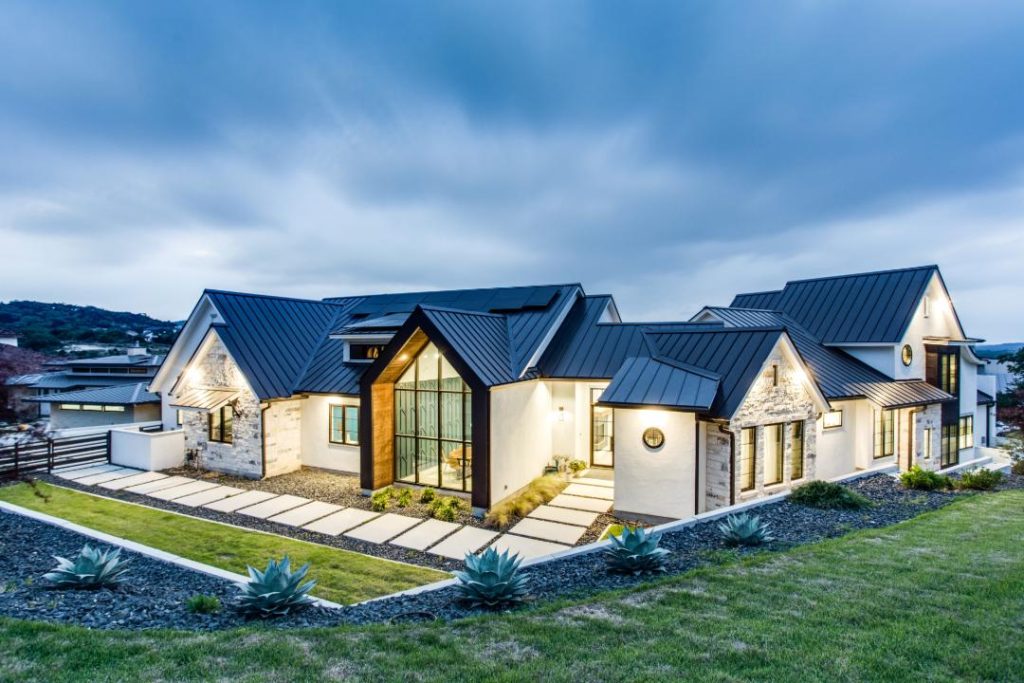
Build Native homes are designed from the start to support solar efficiently, often using standing seam metal roofs that allow panels to be installed without roof penetrations, preserving long-term durability.
High-Performance Building Envelopes
A tight building envelope, achieved through advanced framing, full spray foam insulation, and energy-efficient windows, dramatically improves comfort and energy efficiency. In Central Texas, where cooling demands are high, this can significantly reduce HVAC loads and long-term energy costs.
Buyers may not always see insulation, but they feel the difference in comfort, indoor air quality, and utility bills, all of which translates into perceived value.
Energy-Efficient Windows
Modern low-emissivity, double- or triple-pane windows reduce heat transfer, stabilize indoor temperatures, and lower cooling costs. In luxury and custom homes, these windows also support expansive glass designs without sacrificing efficiency, blending aesthetics with performance.
High-Efficiency Heat Pumps
Air-source and geothermal heat pumps are increasingly viewed as premium mechanical systems. By moving heat rather than generating it, they offer substantial efficiency gains and lower operating costs. In warmer climates like Texas, high-efficiency heat pumps can reduce energy consumption while improving humidity control and indoor comfort.
Rainwater Collection and Water Security
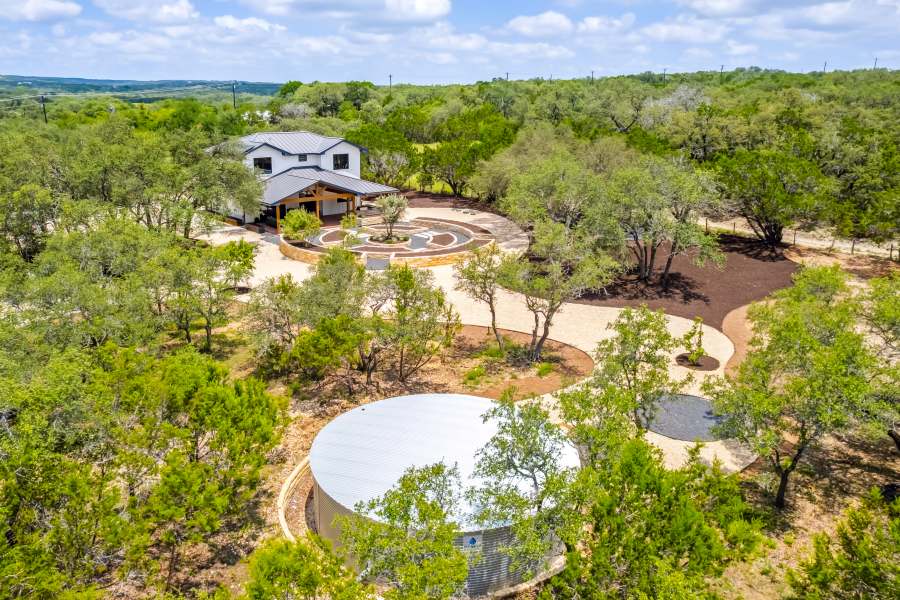
Water conservation is becoming a major value driver in Texas. Homes equipped with rainwater harvesting systems stand out in markets facing water restrictions and infrastructure strain. Beyond sustainability, these systems offer long-term cost stability and water quality benefits that buyers increasingly recognize.
Certifications, Performance, and Market Perception
While individual features add value, homes designed holistically around sustainability often perform best in the market. Properties built to net-zero or near net-zero standards, and those aligned with recognized efficiency benchmarks, benefit from clearer performance narratives.
Buyers and real estate professionals increasingly understand that certified or performance-driven homes:
- Use significantly less energy than conventional homes
- Deliver lower lifetime operating costs
- Offer healthier indoor environments
- Retain value as efficiency standards tighten over time
Even when formal certifications aren’t pursued, documenting performance metrics such as energy modeling, solar production, and water savings, helps reinforce value during resale.
Sustainable Homes Sell Faster and With More Confidence
Beyond price premiums, sustainable homes often spend less time on the market. Realtors consistently report that energy-efficient and resilient features reduce buyer hesitation because they remove uncertainty about future costs.
For buyers comparing two similar homes, the one with predictable energy bills, modern mechanical systems, and water security often feels like the safer long-term investment, even at a higher purchase price.
This trend spans generations. While younger buyers may focus on environmental impact and technology, older buyers increasingly prioritize cost stability, comfort, and reduced maintenance. Sustainability now resonates across the entire buyer spectrum.
Upfront Cost vs. Long-Term Return
It’s true that sustainable construction can involve higher upfront investment. Advanced insulation, high-performance windows, solar systems, and rainwater harvesting all require thoughtful planning and quality installation.
However, when evaluated over the full life of the home, these features typically deliver:
- Lower monthly utility expenses
- Reduced maintenance and system replacement costs
- Greater resilience to energy and water price volatility
- Stronger resale positioning in a changing market
Life-cycle cost analysis consistently shows that high-performance homes cost less to own over time, even before factoring in resale premiums.
Why Sustainable Design Matters More Than Ever in Central Texas
Central Texas presents unique environmental challenges, such as intense summers, periodic freezes, and grid stress. Homes that are designed to perform well under these conditions are simply more future-proof.
Build Native’s approach to green homebuilding is rooted in this regional reality. By combining tight building envelopes, high-efficiency mechanical systems, solar power, rainwater harvesting, and thoughtful design, our homes deliver modern luxury with long-term performance baked in.
Sustainability, when done correctly, isn’t an add-on. It’s the foundation of a smarter, more valuable home.
The Bottom Line: Yes, Sustainable Features Boost Property Value
Sustainable home features support environmental responsibility and enhance financial value, marketability, and long-term livability. In today’s real estate landscape, homes that cost less to operate, perform better in extreme conditions, and offer energy and water independence consistently stand out.
For homeowners considering resale, buyers planning for the future, or anyone designing a custom or semi-custom home in Central Texas, sustainability is no longer optional. It’s one of the clearest paths to protecting and increasing property value.
If you’re ready to explore how modern sustainability and luxury can work together in your next home, Build Native would love to help you start that conversation. Contact us today to see how we can help you bring your dream home to life!
